
Yiwu Market Guide for Buyers: How to Navigate and Actually Buy Inside China’s Biggest Wholesale Market
This Yiwu market guide for buyers is written for people who are about to walk into Yiwu International Trade City with a product list and a budget. It covers what each district sells, when to come, how booth prices and minimum quantities really work, and how goods travel from a booth to your port. Pioneer Group works inside this market every day from our office in Yiwu, China, so everything below is how buying here actually runs, not a tourist summary.
Before you fly: timing, routing and what to bring
The market is enormous, so most of a trip is won or lost before you land. Yiwu sits about two hours from Shanghai by high-speed rail, and most buyers fly into Shanghai or Hangzhou and take the train from there. Give yourself three working days as an absolute minimum. One day covers one district and nothing else.
Timing matters more than first-time buyers expect. The market closes for Chinese New Year and most factories stop with it, so orders placed close to that window arrive late. Large trade fairs also pull experienced booth owners away from their stands. Those dates move every year, so ask us to confirm the current calendar before you book flights rather than working from last year’s blog post.
Arrival is the other thing worth planning. The trade city is a long way from casual, and a buyer who lands at night, finds a hotel, and starts walking the next morning usually burns the first day orienting. Our team handles airport pickup and a planned route through the districts, so day one starts inside the right building instead of in a taxi queue.
Give yourself a full week. This is the single piece of advice we repeat most often, and the one most first-time buyers ignore. A two or three day trip sounds efficient and almost never is. You lose most of day one to arrival and orientation, and the districts are large enough that walking even one of them properly takes the better part of a day. Add sampling, second visits to booths you shortlisted, price negotiation once suppliers see you are serious, and the factory visits that often follow, and a week is the realistic minimum for a first buying trip. Buyers who budget seven days leave with confirmed samples and agreed terms. Buyers who budget three tend to leave with photographs and a plan to come back.
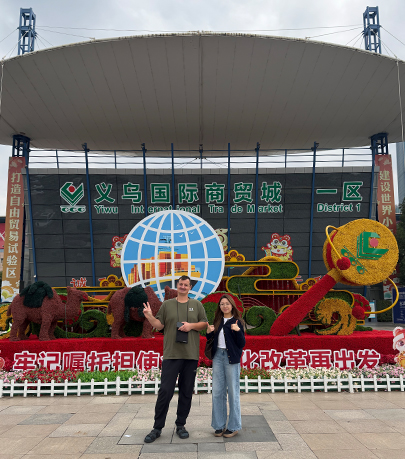
The six districts: a Yiwu market guide for buyers, floor by floor
The trade city is organized by product and by floor, not by supplier. Knowing which floor of which district holds your category is the difference between a productive morning and a very long walk. For the background on the market itself, its scale and history, read our overview of what Yiwu market is and how big it really is. This page stays practical.
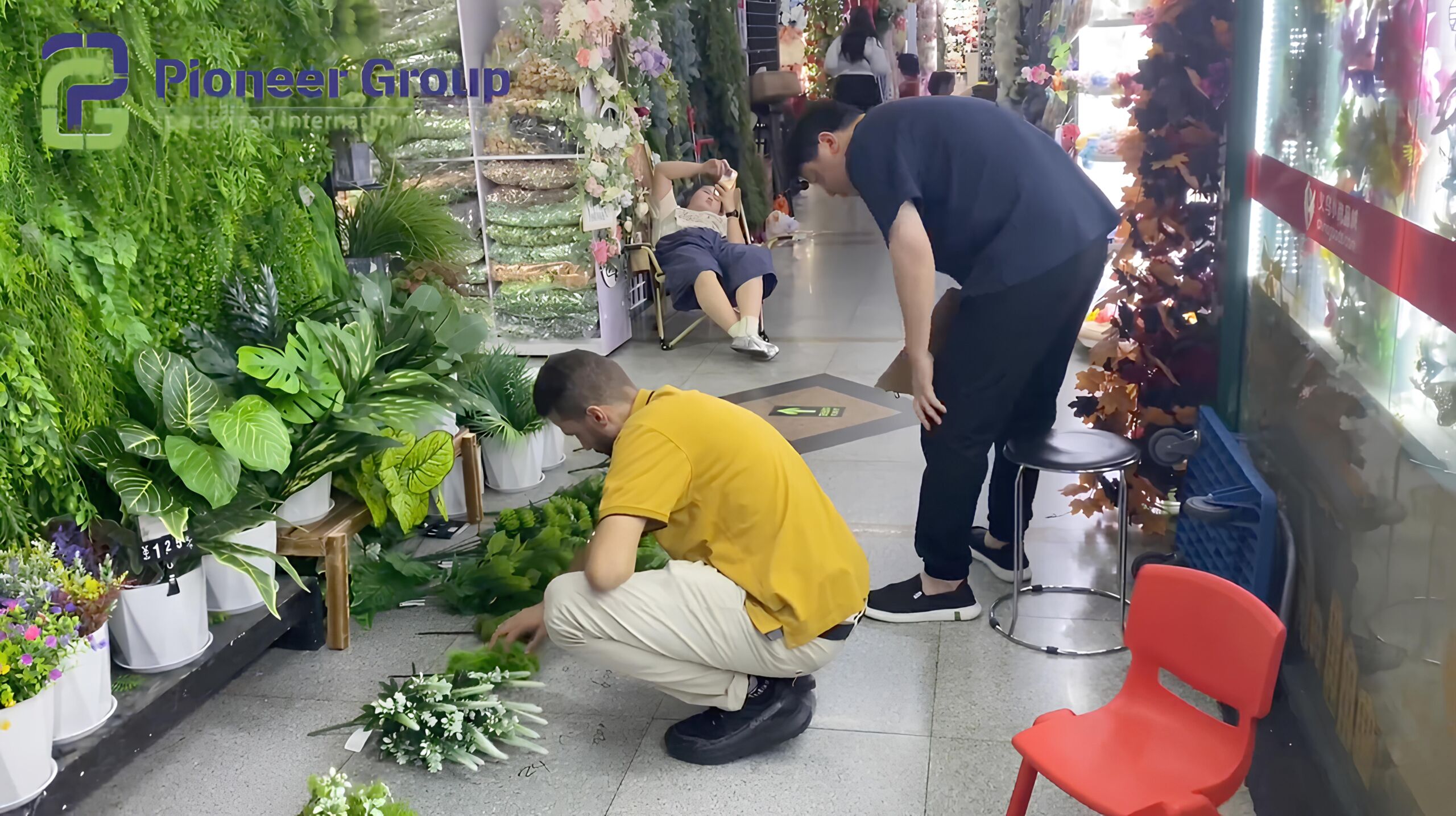
One thing that catches buyers out: general clothing is not sold in these six districts. Garments trade at the separate Huangyuan Garment Market, and raw materials and machinery at the Production Materials Market. District 4 carries socks, knitwear, underwear and shoes, but if you have come for apparel you are in the wrong building. Booth counts also shift as the operator recounts, so treat any published total as approximate.
How booth pricing and MOQs really work
If you read only one part of this Yiwu market guide for buyers, make it this one. Prices in the market are opening positions, not price tags. The number a booth owner writes down assumes one carton, no relationship and no repeat order. Volume moves it, returning business moves it further, and buyers with local knowledge typically land 15 to 30 percent below the first quote.
Three things move the number more than your negotiating style.
Carton quantity
Almost everything in the trade city is priced and sold by the carton, not the piece. Ask how many pieces are in a carton before you ask for a price. An attractive unit price on a 600-piece carton is a very different order from the one in your head.
Who you are actually talking to
Some booths are the factory. Many are trading companies representing several factories, and some simply resell goods from other booths. The price gap between those three is real and it is invisible from the aisle.
Order size across the whole trip, not per booth
One booth rarely gives its best number for one carton. Leverage comes from combining several products, several suppliers and one shipment. Our minimum order value is US$5,000 across the order and our commission is 3% to 5% depending on order quantity, so the work goes into lowering your total landed cost rather than churning small deals. Anything beyond that range you discuss with our team in Yiwu before you commit.
Negotiate in writing after the visit, not only in the aisle. Take the booth number, photograph the sample and the price sheet, then confirm specification, packing and price by message. A Yiwu sourcing agent working the market for you runs that second pass as standard, and that is usually where the gap between the sample you touched and the goods that get packed shows up.
The first quote
- “This is my best price”
- “MOQ is one carton”
- “Yes, we can print your logo”
- “We are the factory”
- “Price includes shipping”
After the right questions
- Best price for what quantity, paid how, over how many orders
- One carton of how many pieces, and what changes at ten cartons
- Logo printed by whom, on what sample, at what setup cost
- Factory for which items, and traded for which
- Included to which port, on which terms, excluding what
Samples, inspection, consolidation and getting the goods home
The market visit is the short part. What follows decides whether the order is profitable, and it is the stage any honest Yiwu market guide for buyers has to spend time on.
Buy or request a sample from each booth you intend to order from, label it with the booth number, and keep it. That sample is your reference for the goods that arrive in the carton weeks later. Without it, a quality dispute is one person’s word against another’s.
Booth staff pack what the factory sends them. Nobody in the aisle is accountable for the 800th unit in the carton. Having goods inspected before your final payment is released costs far less than rejecting a container after it arrives, and it has to happen in China, not at your port.
Twelve suppliers means twelve delivery dates, twelve packing standards and twelve invoices. Goods are received, counted and consolidated in our Yiwu warehouse so they can be handed together to the buyer’s freight agent. Confirm packing-list and export-document responsibilities with that agent before collection.
Across sea, air and express freight from China, sea is the default for full containers, air suits urgent or high-value goods, and express covers samples and small parcels. Get the freight quoted before you place the order rather than after. On low-value bulky goods, freight can cost more than the goods themselves, and that is a calculation best done while you can still change the product.
What buying alone usually costs
Yiwu market questions buyers ask before they book
How many days do I need at Yiwu International Trade City?
Three working days is a realistic minimum for one or two product categories. The districts are large and a single district can absorb a full day on its own. If your list spans several districts, plan four to five days. A planned route and a Mandarin speaker remove most of the time lost to finding the right floor.
What is the smallest order I can place, and what does it cost?
Pioneer Group works with bulk buyers only, with a minimum order value of US$5,000 across the whole order. That total can combine several products from several different suppliers into one consolidated shipment, so it is not a per-item minimum. Our commission is 3% to 5% depending on order quantity, and anything outside that range gets discussed with you directly before you commit.
Do I have to visit Yiwu in person to buy?
No. You can buy entirely at a distance, and much of this Yiwu market guide for buyers applies just as well to an order placed from abroad. Send your product list with target prices and quantities, and our team walks the booths, sends photos and video from the aisle, collects quotes and physical samples, then coordinates agreed inspection and consolidation before handover to your freight agent. During business hours in China we reply within 2 hours.
Bring us your product list
No Yiwu market guide for buyers replaces a real quote. Whether you are flying in next month or buying entirely at a distance, the work starts the same way: a list of products, target prices and quantities. Send it over and our team in Yiwu will tell you which districts it touches, what it realistically costs, and what it takes to get it to your port.