When you buy from China, your goods pass through more hands than you probably realise, and every hand adds a little cost or a little risk. Understanding the China supply chain is the difference between knowing what you are paying for and simply hoping the final price is fair. Here are the six players between a Chinese factory and your front door, and what each one actually does.
Why the China supply chain has so many players
China does not sell to the world through one channel. A single order can touch a factory, a middleman, a market seller, an agent, and two different logistics companies before it reaches you. In supply chain terms, that is a long chain, and length has a cost.
One order, six separate businesses
Each player is an independent company with its own paperwork and its own idea of when the job is finished. Nobody owns the order end to end, so a delay in one link reaches you as a surprise.
Every layer takes a margin
Each exists for a reason, and each takes a margin. Once you have the China supply chain explained layer by layer, the quotes you receive start to make sense. Two quotes for the same product usually differ by how many layers sit between you and the maker.
The 6 players between factory and your door
Three of these players sell you the goods and three of them handle the order. Reading a quote is easier once you keep the two groups apart.
The three players who sell you the goods
- The factory. The actual manufacturer. This is where the goods are made and where the lowest price lives. The catch: many sellers who call themselves factories are not.
- The trading company. A middleman that buys from factories and resells to you, often with a polished English website. Useful for small or mixed orders, but you pay a markup for the convenience. The markup is almost never itemised, so it reaches you as the product price, not as a fee.
- The market seller. In places like Yiwu, a booth sells finished goods from many factories. Fast and flexible for variety buyers, but a step removed from the maker. Yiwu International Trade City alone holds 5 districts and more than 75,000 booths, which is why variety buyers start there.
The three players who handle the order
- The sourcing agent. Your representative on the ground who finds the real factory, negotiates, and manages the order for a transparent fee instead of a hidden markup. Pioneer Group charges 3 to 5 percent by order quantity on a US$5,000 minimum, with the factory price visible underneath.
- The freight forwarder. The company that books and moves your shipment by sea or air and handles the transport paperwork. A forwarder buys space on someone else’s vessel, so the same route can be quoted very differently week to week.
- The customs broker. The specialist who clears your goods through customs at both ends so they do not sit stuck at a port. The broker works from documents the earlier players produced, so a factory paperwork mistake is usually found here.
Where each player adds cost
The same six roles, read as a cost map.
| Player | What they do | Where they add cost |
|---|---|---|
| Factory | Makes the goods | The base price, the lowest in the chain |
| Trading company | Buys from factories and resells to you | A markup folded into the unit price |
| Market seller | Sells goods from many factories at a booth | A booth margin above the factory price |
| Sourcing agent | Finds the factory, negotiates, manages the order | A stated commission, 3 to 5 percent by quantity |
| Freight forwarder | Books and moves the shipment | Freight charges and document fees |
| Customs broker | Clears the goods at both ends | Clearance charges at origin and destination |
Why the word “manufacturer” often is not true
Here is the trap that costs new buyers the most. A large share of sellers on B2B platforms present themselves as factories when they are really trading companies. The listing looks the same, the prices look similar, but you are one layer further from the source and paying for it. Cutting through that layer is the single biggest saving in the whole China supply chain, and it is also the hardest thing to verify from your desk on another continent.
Why the layer is hard to see from your desk
A profile carries the same photographs, certificates and fast replies whichever type of company wrote it, so it proves little on its own. The signals that separate the two sit off the platform: the business licence, and whether anyone you trust has stood inside the building.
Where seeing the chain is not the same as reaching the source
Knowing these six players exist tells you how the money flows. Knowing which layer a specific supplier really sits in, and getting past the middlemen to the factory that actually makes your product, takes local legwork, factory visits, and a network built over years. As a China sourcing agent based in Yiwu, Pioneer Group works directly with over 5,000 factories and puts you at the source rather than a layer above it. If you want to see how those pieces fit into one managed process, read how we run the supply chain end to end.
What reaching the factory takes on the ground
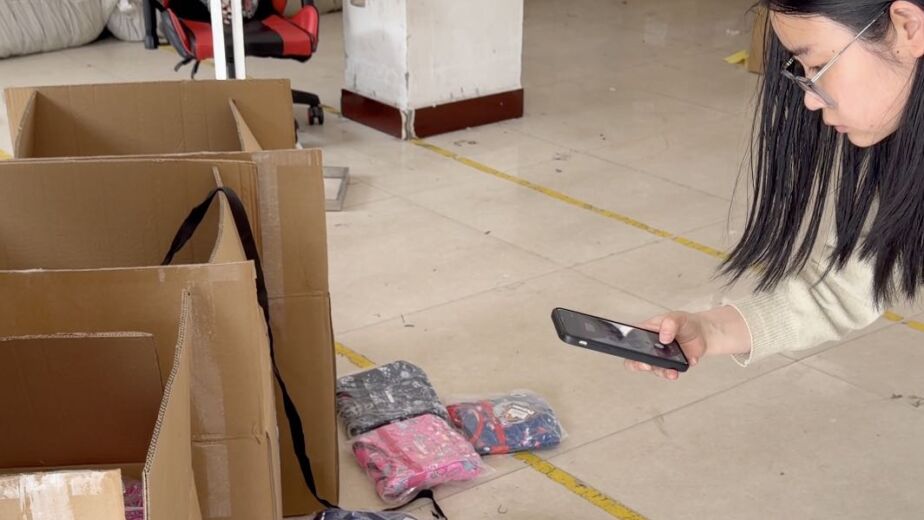
In practice it means someone going to the address on the licence, watching your product being made, and staying on the order after the deposit is paid. Our inspection runs in three stages, before production, during production and before shipment, and each stage comes back as a photo and video report.
Frequently asked questions
How many middlemen are in a typical China supply chain?
It varies, but an order can pass through a trading company, a market seller, and two logistics firms before it reaches you. A sourcing agent replaces the hidden middlemen with one transparent representative.
How do I know if a supplier is a real factory?
You cannot always tell from a listing, which is the problem. Verifying it takes checking licences and, ideally, a factory visit or audit on the ground in China.
Does a longer supply chain mean higher prices?
Usually yes. Every extra hand in the China supply chain adds a margin, so getting closer to the factory generally lowers your cost, provided you can reach it safely.
How Pioneer Group can help
Every extra party between the factory and your door adds cost. Pioneer handles the China side from one office in Yiwu: finding the supplier, inspecting the goods, then storing and consolidating them until the shipment is ready.
- Sourcing. Access to 5,000+ factories from an office in Yiwu, so you deal with the maker instead of a reseller.
- Quality inspection. Three stages, raw material, in production and pre shipment, with photo and video reports.
- Consolidation and shipping. Orders from many booths received at one warehouse and loaded as a single shipment.
Commission is 3 to 5 percent by order quantity, paid by you and never by the factory, with no hidden markup on the goods. Minimum order value is US$5,000. We reply within 2 hours during China business hours, in English, Chinese, Arabic, Russian, Turkish or French.
Talk to us: WhatsApp +86 190 2577 9716, info@pioneergptrading.com, or the contact form.
Pioneer Group is a China sourcing agent based in Yiwu, China, helping wholesale and bulk buyers source, inspect, consolidate, and ship orders from China.