Imagine a marketplace so vast that if you spent only three minutes at every booth for eight hours a day, it would take you over a year to see it all. Welcome to the Futian Market Yiwu officially known as the Yiwu International Trade City the pulsating heart of the world’s small commodity supply chain. For international traders, this isn’t just a market; it is a global phenomenon where 75,000 showrooms bridge the gap between Chinese manufacturing and the rest of the world.
However, the sheer scale of the Futian Market Yiwu can be as overwhelming as it is lucrative. Without a strategic roadmap, many importers find themselves lost in a maze of five massive districts, struggling with language barriers, and navigating complex logistics that can make or break their profit margins.
In this definitive 2026 guide, we go beyond the surface. We will provide a surgical breakdown of all five districts, reveal the “insider” secrets to finding a top-tier Yiwu agent, and simplify the logistics of shipping from China. Whether you are a first-time visitor or a seasoned e-commerce mogul looking to optimize your sourcing, this guide is your blueprint to mastering the world’s largest wholesale hub.
In this guide, you will learn:
- A detailed breakdown of Futian Market Districts 1-5 and their core products.
- Why a professional Yiwu sourcing agent is your most valuable asset.
- Proven strategies for price negotiation and quality control.
- Critical logistics: From the Yiwu warehouse to your doorstep.
Strategic Layout: Navigating the 5 Districts of Futian Market
The Futian Market Yiwu is divided into five primary districts, each acting as a massive specialized hub. Navigating these requires more than just comfortable shoes it requires a tactical understanding of which floor holds the key to your specific niche.
Pro Tip: Use the [Yiwu Market Map] to locate specific booth blocks before you arrive to save hours of walking.
District 1: The Creative & Festive Hub
Established in 2002, District 1 is the oldest but perhaps the most vibrant section of the Yiwu International Trade City. It is the global ground zero for the toy and ornament industries.
- 1st Floor: Common toys, inflatable toys, and high-end plush toys.
- 2nd Floor: Jewelry, hair accessories, and jewelry components.
- 3rd Floor: Festival crafts, decorative arts, and the famous “Christmas Village.”
- 4th Floor: Factory direct sales centers (ideal for high-volume orders).
| Product Category | Key Items | Target Buyer |
| Toys | Remote control cars, educational sets, plushies | E-commerce & Retail chains |
| Jewelry | Earrings, necklaces, DIY beads | Boutique owners & Amazon sellers |
| Christmas | Trees, LED lights, ornaments | Seasonal importers |
District 2: Hardware, Electronics, and Travel Gear
District 2 is where functionality meets global trade. If you are looking for durable goods or the latest in consumer tech accessories, this is your destination.
- 1st Floor: Hardware tools, electrical products, and locks.
- 2nd Floor: Hardware accessories, specialized tools, and outdoor gear.
- 3rd Floor: Kitchenware, small home appliances, and telecommunications equipment.
- 4th Floor: High-end manufacturing showrooms and export-oriented trade companies.
District 3: Stationery, Sports, and Apparel Accessories
For traders focused on the “Back to School” season or the fitness industry, District 3 offers an unparalleled variety of SKU options.
- 1st Floor: Pens, paper products, and office supplies.
- 2nd Floor: Sporting goods and outdoor fitness equipment.
- 3rd Floor: Apparel accessories (zippers, buttons, lace) and beauty products.
- 4th Floor: Specialized sports equipment and consumer electronics.
District 4: The Textile and Daily Necessity Powerhouse
District 4 is the most massive section of the market, focusing on high-turnover consumer goods. This is where most international traders find their “bread and butter” products.
- 1st Floor: Socks and hosiery.
- 2nd Floor: Daily necessities, gloves, and hats.
- 3rd Floor: Sewing thread, ribbons, and textile raw materials.
- 4th Floor: Belts, scarves, and bras.
District 5: The Global Gateway & Auto Parts
The newest addition to the Futian Market Yiwu, District 5, was designed with a focus on imported goods and the growing automotive aftermarket.
- 1st Floor: Imported goods (food, healthcare products, and wine from 100+ countries).
- 2nd Floor: Bedding and home textiles.
- 3rd Floor: Curtains, knitted fabrics, and hotel supplies.
- 4th Floor: Auto parts, motorcycle accessories, and car care products.
Each of these districts is interconnected, but their scale means you can easily spend an entire day in just one building. To visualize the layout and plan your walking route effectively, see our detailed [Yiwu Market Map Guide].
Why Futian Market Beats Online Sourcing (Alibaba vs. Yiwu)
For many international traders, the debate between Alibaba and Yiwu is a classic “Digital vs. Physical” showdown. While Alibaba is excellent for initial research, the Futian Market Yiwu offers three critical strategic advantages that online algorithms simply cannot replicate.
The Physical Advantage: “Touch-and-Feel” Quality Control
The biggest risk in online sourcing is the “Expectation vs. Reality” gap. On a screen, every product looks like a 5-star masterpiece.
- Real-Time Inspection: In Yiwu, you don’t wait two weeks for a sample. You can walk into a booth in District 2, pick up a power tool, and check the build quality, weight, and finish immediately.
- Instant Iteration: If a product isn’t exactly what you need, you can talk to the supplier on the spot. “Can we change this button to metal?” or “Is there a version with a higher-capacity battery?” These conversations take seconds in person but can take weeks of back-and-forth emails online.
MOQ Dynamics: The Power of Small Batches
One of the primary barriers on Alibaba is the Minimum Order Quantity (MOQ). Factories often demand 500 or 1,000 units to start production because they need to cover the cost of “turning on the machines.”
- Wholesale vs. Factory: Most Yiwu vendors are large-scale wholesalers who keep “ready-to-ship” stock. This means you can often buy as little as one or two cartons (50–100 units).
- Risk Mitigation: For a new Amazon seller or a boutique owner, this low-MOQ flexibility allows you to test 10 different product ideas with the same budget that would only cover one product on Alibaba.
Consolidation: The Ultimate Logistic Hack
This is the “secret sauce” of Yiwu sourcing. If you buy from 20 different suppliers on Alibaba, you end up with 20 different shipping bills, 20 sets of customs paperwork, and 20 different arrival dates.
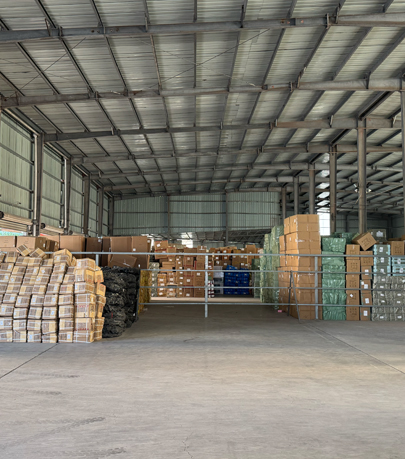
- The Power of One Container: In Yiwu, you (or your Yiwu agent) can collect goods from 50 different booths across all five districts and bring them to a single Yiwu warehouse.
- Efficiency: These items are then “consolidated” into one single shipping container. You pay for one shipment, handle one customs entry, and receive all your inventory at once. This reduces your “landed cost” per unit by up to 30-40% compared to fragmented online shipping.
Essential Logistics: Opening Hours and Best Times to Visit
To navigate the Futian Market Yiwu like a pro, you must align your travel itinerary with the cultural and business rhythms of Zhejiang Province. Here is the 2026 logistical blueprint for international traders.
Opening Hours: The “9-to-5” Reality Check
While the official operating hours for the Yiwu International Trade City are 9:00 AM to 5:00 PM, seasoned traders know the nuances of the “market pulse.”
- The Early Bird Myth: Unlike some wholesale markets that thrive at dawn, Yiwu is not an early-morning hub. Most showrooms don’t fully open until 9:30 AM. Arriving at 8:00 AM will often leave you waiting outside closed shutters.
- The Mid-Day Peak: The most productive window is between 10:00 AM and 4:00 PM. This is when decision-makers (owners) are most likely to be present for price negotiations.
- The Sunset Shutdown: By 4:30 PM, vendors begin packing samples and preparing for the next day. If you arrive at 4:00 PM, you will likely be rushed or ignored.
- Weekends & Public Holidays: Remarkably, the market stays open on weekends and most public holidays (like Labor Day or Mid-Autumn Festival), though shop attendance may drop by 20-30%.
Seasonal Considerations: Navigating the 2026 Calendar
The most critical date for any China-bound trader is the Lunar New Year (Spring Festival). In 2026, Chinese New Year falls on February 17.
- The Dead Zone: The market fully closes for approximately 15 days. For 2026, expect a total shutdown from February 11 to February 25.
- The “Slow-Down” Period: Factories begin stopping production as early as late January. If you need goods shipped before the holiday, you must finalize your orders by January 15, 2026.
- The Best Sourcing Windows: * March to June: Ideal for summer and autumn inventory.
- September to November: The peak season for spring planning and the best time to see new product launches.
The “Yiwu Fair” vs. Daily Market Operations
It is vital to distinguish between the permanent showrooms and the temporary trade fairs.
- The Daily Market: This is the permanent 75,000-booth setup across Districts 1-5. It is open year-round and is where 90% of sourcing happens.
- The Yiwu Fair (October): Officially the China Yiwu International Commodities Fair, this is a 5-day mega-event (usually late October). It attracts more specialized manufacturers from outside Yiwu and is great for finding innovative, export-ready products.
- Specialized Fairs: Keep an eye on the China Yiwu Hardware & Electrical Appliances Fair (scheduled for April 20-22, 2026). If your niche is tools or tech, syncing your visit with these dates adds immense value.
Traders’ Travel Checklist 2026
- Best Month: March (Post-CNY reopening energy).
- Worst Month: February (Holiday closure).
- Essential Tool: A dedicated Yiwu agent to confirm if specific factory showrooms are open before you fly.
The sections below are designed to address the deep operational needs of an international trader. By focusing on the “Agent-Pricing-Logistics” trifecta, we move the article from a simple guide to a professional business blueprint.
The “Yiwu Sourcing Agent”: Why You Can’t Succeed Without One
In the Futian Market Yiwu, a professional sourcing agent is not just a translator; they are your risk manager, quality controller, and logistics architect. Navigating 75,000 booths alone is a recipe for exhaustion; navigating them without a local partner is a recipe for financial loss.
Language Barrier: Beyond Simple Translation
While many vendors speak “Trade English” (prices and basic specs), they rarely grasp the nuances of complex technical requirements or legal terms.
- The Nuance Gap: An agent ensures that “water-resistant” doesn’t get translated as “waterproof” by a factory eager to close a deal.
- Relationship Building (Guanxi): In China, business is personal. A local agent who speaks the local dialect can build a rapport with shop owners that a foreigner simply cannot, often unlocking “hidden” stock or priority production slots.
The Workflow: From Booth to Boardroom
A top-tier Yiwu sourcing agent manages the entire lifecycle of your order:
- Order Tracking: Following up with 20 different suppliers to ensure production stays on schedule.
- Quality Inspection (QC): Checking the goods at the Yiwu warehouse before they are loaded into a container. Once the ship leaves Ningbo, it is too late to find a defect.
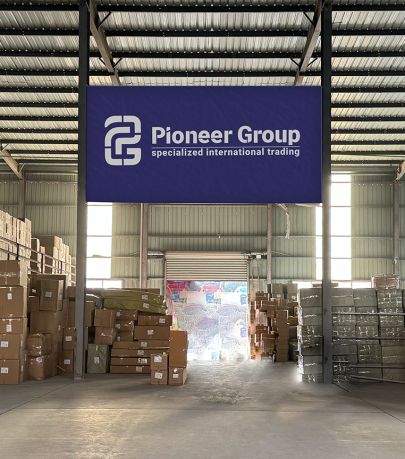
- Warehousing: Providing a centralized hub to store goods from multiple districts until the shipment is ready.
Legal & Financial: The Safety Net
- RMB Payments: Most Futian vendors only accept Chinese Yuan (RMB). Your agent handles the currency exchange and pays each vendor individually, saving you dozens of international wire fees.
- Export Licenses: Many small booths do not have their own export licenses. An agent acts as the “Exporter of Record,” handling all the red tape required to get your goods out of China legally.
Need a boots-on-the-ground partner to secure your supply chain? Contact our Yiwu Experts today for a free consultation.
Pro Tip for Success: While an agent is essential, understanding the landscape yourself is power. Check out our [Yiwu Market Suppliers Guide: How to Find Reliable Vendors] to learn how to vet showrooms like a seasoned professional.
Pricing and Negotiation Mastery
Success in Yiwu is measured in cents per unit. Understanding the local pricing DNA is essential for maintaining your retail margins.
The Tiered Pricing System: Understanding “Ex-works”
In the Futian Market Yiwu, almost all quotes are given as EXW (Ex-Works).
- What it means: The price only covers the product at the shop’s door. It does not include trucking to the port, export clearance, or ocean freight.
- The Volume Curve: Vendors use a tiered system. Buying 1 carton might cost $1.00/unit, but 10 cartons could drop that to $0.85. Always ask for the “Price Ladder” to see where your sweet spot lies.
Negotiation Tactics: Getting Factory Prices
To get the best rates, you must signal that you are a “long-term partner,” not a “one-time tourist.”
- Reference the Market: “I saw a similar spec in District 2 for 5.5 RMB; can you do 5.2 if I order 50 cartons?”
- Focus on the Re-order: Suppliers in Yiwu value consistency over a single large splash. Discussing your “monthly replenishment plan” is more effective than haggling over a few cents on the first order.
Don’t waste your budget on saturated markets. Discover the high-margin opportunities in our exclusive guide: [Best Products to Import from Yiwu: Top Winning Items for 2026].
Warehousing and Shipping from Yiwu
Logistics is where the profit of a Yiwu trip is often won or lost. Efficiency here depends on your proximity to China’s massive shipping infrastructure.
Consolidation Services: The 20-to-1 Rule
The magic of Yiwu is the ability to mix. You can source electronics from District 2, stationery from District 3, and hardware from District 4. Your agent collects these at a Yiwu warehouse, inspects them, and packs them into a single Full Container Load (FCL). This reduces your shipping and customs costs by up to 40% compared to shipping individual LCL (Less than Container Load) lots.
Strategic Shipping Routes
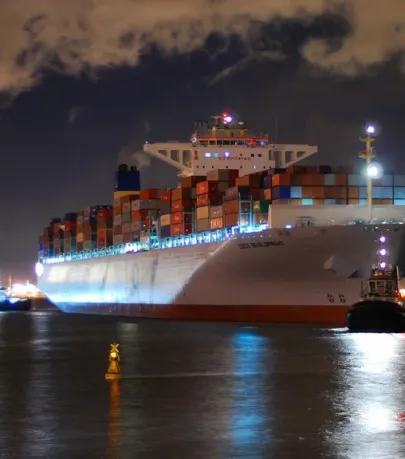
- Yiwu-Ningbo Port Proximity: Ningbo-Zhoushan Port is the world’s busiest by tonnage and is only 150km from Yiwu. Trucking from Yiwu to Ningbo is roughly 30-40% cheaper and 2 hours faster than shipping through Shanghai.
- The “Yiwu-Madrid” Railway: For European traders, the “Steel Silk Road” is a game-changer. In 2026, freight trains from Yiwu to Europe take approximately 18-22 days faster than sea and significantly cheaper than air.
Customs Clearance: Ensuring Compliance
Don’t let your goods get stuck in “Customs Limbo.”
- Documentation: Your agent prepares the Packing List, Commercial Invoice, and Certificate of Origin.
- Compliance: Ensuring that products (especially toys and electronics) meet the specific safety standards of your home country (e.g., CE, UL, or GCC).
Practical Tips for International Traders: Surviving and Thriving
Sourcing at the Futian Market Yiwu is a marathon, not a sprint. To maintain your energy and focus, you need a logistical setup that minimizes friction.
Accommodation: Where to Stay Near the Action
Location is everything. If you stay too far, you’ll spend two hours a day in Yiwu’s notorious “market rush” traffic.
- Luxury & Convenience: The Yiwu Marriott Hotel and the Shangri-La Yiwu are the gold standards. Both are within walking distance or a 5-minute taxi ride to District 1 and the Financial Center.
- The “Trader’s Choice”: Hotels like the Kingdom Hotel or Best Western Premier Ocean Hotel are favorites for international traders. They offer business centers, prayer rooms, and diverse breakfast buffets (including Halal and Western options) to cater to global tastes.
- Pro Tip: Always book a hotel that offers a free shuttle service to the specific District you plan to visit first.
Transportation: Getting to the Wholesale Capital
Yiwu does not have an international airport that accepts direct long-haul flights from New York or London. Most traders arrive via Shanghai or Hangzhou.
- From Shanghai (PVG): The high-speed train (G-Train) from Shanghai Hongqiao Railway Station is the most efficient. It takes approximately 90 minutes.
- From Hangzhou (HGH): If you can fly into Hangzhou, you are only 30 minutes away by high-speed rail.
- Private Car: For those carrying heavy samples or traveling in a group, a private van from Shanghai to Yiwu takes about 3 hours and costs roughly $120–$150—a worthy investment for comfort.
Summary & Conclusion:
As we navigate the complexities of global trade in 2026, the Futian Market Yiwu remains the undisputed heavyweight champion of small commodities. While digital platforms continue to grow, the “Yiwu Advantage” the ability to physically verify quality, negotiate face-to-face, and consolidate massive variety into a single shipment is a competitive edge that cannot be automated.
Mastering this market requires a blend of local expertise and global vision. By understanding the Strategic Layout of the 5 Districts, partnering with a high-integrity Yiwu sourcing agent, and mastering the nuances of Ex-works pricing, you aren’t just buying products; you are building a scalable, resilient supply chain.
Final Authoritative Advice: Start Small, Scale Fast
Don’t feel pressured to fill a 40-foot container on your first trip. Use the low MOQs of the Futian Market to test your niche.
- Source a wide variety of SKUs in small quantities.
- Test them in your home market (Amazon, Noon, or Retail).
- Scale only the winners with the help of your local agent.
Ready to take action? Follow our How to Buy from Yiwu Market: A Complete Step-by-Step Guide] to navigate your first transaction with zero stress.