
The Yiwu Market (Futian Market) is a global phenomenon, housing over 75,000 showrooms that supply everything from household essentials to the latest trending gadgets. For any international trader, the question isn’t whether Yiwu has the products they needit’s how to navigate this massive ecosystem without falling into common procurement traps.
The core dilemma most importers face is deciding between two distinct business models: the yiwu sourcing agent and the traditional China trading company. While both appear to offer the same end goal getting products from the factory to your warehouse the internal mechanics of these two options are worlds apart.
In this definitive guide, we will break down the fundamental differences to help you secure the highest profit margins. We will explore the operational structures of a sourcing company vs agent, revealing the hidden costs often buried in “factory prices” and the logistics of consolidating orders from multiple districts. By the end of this article, you will have a clear blueprint for choosing the partner that aligns with your specific business scale, whether you are a boutique e-commerce seller or a high-volume wholesaler.
What We Will Cover:
- The Transparency Gap: Why one model reveals the factory source while the other keeps it a secret.
- Cost Comparison: A detailed breakdown of commission-based fees versus hidden product markups.
- Risk Management: How quality control and logistics differ when handled by an agent versus a trader.
- Strategic Selection: A step-by-step guide to vetting your partner in the Yiwu market.
What is a Yiwu Sourcing Agent?
At its core, a yiwu sourcing agent is your professional representative on the ground essentially acting as your “eyes and ears” within the sprawling 4-million-square-meter Futian Market. Unlike a seller, an agent represents the buyer. They are locally based experts who understand the nuances of the five main districts and the thousands of specialized product categories they house.
Core Services of a Yiwu Agent
A professional agent doesn’t just find a product; they manage the entire lifecycle of an import order. Their service suite typically includes:
- Supplier Identification: Navigating the 75,000+ booths to find the specific “source factory” rather than secondary wholesalers.
- Price Negotiation: Leveraging local market knowledge to ensure you pay the “local price” rather than an inflated “tourist/foreigner price.”
- Quality Control (QC): Physically inspecting goods at the warehouse before the final 70% balance is paid to the supplier.
- Logistics & Consolidation: This is their “superpower.” They collect small orders from 10 or 20 different suppliers and combine them into one seamless container shipment.
Navigating the world’s largest small commodity hub requires strategy. Before deciding on a partner, consult our Yiwu Market Guide: The Ultimate Wholesale Buying Guide to understand the layout of the five main districts.
The Revenue Model: Transparency First
The most defining characteristic of a yiwu sourcing agent is their fee structure. They operate on a commission-based model, typically ranging from 3% to 10% of the total order value.
Because they charge a service fee, they have no incentive to hide the factory’s identity. In fact, most reputable agents will provide you with the original factory receipts. You pay the factory price directly, and you pay the agent for their expertise and labor.
Key Advantage: Personalized Advocacy
The primary advantage here is transparency and loyalty. Because the agent is paid by you, their goal is to protect your interests. If a batch of goods arrives at the warehouse with defects, a dedicated agent will reject the shipment and demand a reproduction something a trading company might be hesitant to do if it cuts into their own profit margins.
What is a China Trading Company?
While a Yiwu sourcing agent works for you, a China trading company is essentially a merchant. They act as a sophisticated middleman that sources goods from various factories, adds a markup, and resells them to international buyers. Think of them as a “one-stop-shop” that simplifies the buying process by taking ownership of the inventory and the transaction.
Core Services: Speed and Simplified Billing
Trading companies thrive on convenience. Their service suite is designed for buyers who want a “retail-like” experience in a wholesale environment:
- Stock Maintenance: Unlike agents, some large trading companies keep popular items in their own warehouses, allowing for immediate dispatch.
- Quick Shipping: Because they often have pre-negotiated contracts with freight forwarders and standardized packaging, the turnaround time from “order” to “shipped” can be very fast.
- Simplified Billing: Instead of paying 15 different factories, you receive a single invoice from the trading company. This reduces banking fees and administrative headaches.
The Revenue Model: The “Hidden” Margin
The most significant difference in the sourcing company vs agent debate is how they get paid. A trading company rarely charges a visible commission. Instead, their profit is “baked into” the unit price of the product.
If a factory in District 3 sells a toy for $1.00, the trading company might quote you $1.25. You don’t see the 25% markup; you only see the final price. While this seems simple, it often means you are paying significantly more than the actual market rate without realizing it.
Key Advantage: Low MOQs and Convenience
The “killer feature” of a trading company is their ability to offer Low Minimum Order Quantities (MOQs). Because they buy in massive bulk from factories or consolidate orders from multiple small buyers, they can often sell you a single carton of a product that a factory would require a 10-carton minimum for.
For a startup or a boutique retailer just testing the waters, this convenience can sometimes outweigh the higher unit cost. However, as you scale, these hidden margins can quickly erode your competitive edge.
Sourcing Company vs Agent: A Side-by-Side Comparison
When you are deep in the trenches of procurement, the choice between a sourcing company vs agent often comes down to your business model and long-term goals. To make the decision-making process easier, we have distilled the core differences into a technical comparison.
Comparison Table: Choosing Your Yiwu Partner
|
Feature |
Yiwu Sourcing Agent |
Trading Company |
|
Pricing Structure |
Transparent: Factory Price + Fixed Commission (3–10%) |
Hidden: Profit margins are built into the unit price |
|
Supplier Access |
Open: You get direct access to the factory/booth info |
Closed: They act as a “black box” to protect their source |
|
Customization (OEM) |
High: Facilitates direct talk with engineers for custom designs |
Low: Usually limited to “off-the-shelf” stock items |
|
Quality Control |
Independent: They inspect goods on your behalf |
Self-Regulated: They inspect their own inventory |
|
Logistics |
Consolidated: Mixes products from 20+ suppliers into 1 container |
Direct: Usually ships only the products they sell |
|
Best For |
Growing Brands: Scaling businesses and bulk buyers |
Beginners: Small retailers and “test” orders |
Why the “Transparency Gap” Matters?
The biggest takeaway from this comparison is the transparency gap. If you use a yiwu sourcing agent, you own the relationship with the factory. If you ever decide to change agents, you still know who makes your products.
With a trading company, the supplier’s identity is a trade secret. If the trading company goes out of business or raises their prices significantly, you are forced to start your sourcing journey from scratch. This lack of “supply chain ownership” is a major risk for brands looking to build a multi-year legacy.
Quality Control: Who is Watching the Factory?
In the sourcing company vs agent debate, the “Conflict of Interest” is a critical factor.
- A trading company is technically the seller. If they find a defect, admitting it costs them money in delays or returns.
- A yiwu sourcing agent is your protector. Their job is to find mistakes before the goods leave China, saving you thousands incosts for defective items.
Key Takeaway: If your goal is to minimize the “Cost of Goods Sold” (COGS) while maximizing quality, the agent model is almost always the more sustainable path for professional traders.
Why You Need a Yiwu Sourcing Agent for the Futian Market
The Futian Market is not a typical trade show; it is a permanent wholesale city. Navigating its five districts each the size of several football stadiums requires more than just a map. It requires a yiwu sourcing agent who understands the unspoken rules of the local trade. Here is why a professional partner is indispensable for your success in Yiwu.
Overcoming the Language Barrier and Etiquette
While many stall owners in Yiwu speak “business English,” deep technical negotiations require more than just basic vocabulary. A local agent understands the local dialects and business etiquette (Guanxi). They know how to build rapport with suppliers, which often leads to better lead times and priority during peak seasons. Without this cultural bridge, misunderstandings regarding material specifications or packaging details can lead to costly errors.
Expert Negotiation: The “Yiwu Price” vs. “Export Price”
There is often a significant gap between the price quoted to a walk-in foreign tourist and the price given to a local professional.
- The Export Price: Higher margins, often quoted to cover the perceived “hassle” of dealing with international requirements.
- The Yiwu Price: The razor-thin margin price given to those who understand the local market value.
A yiwu sourcing agent knows the raw material costs and the labor involved for specific items. They ensure you aren’t overpaying by cross-referencing quotes across multiple districts.
Logistics Consolidation: The Secret to High Margins
The biggest logistical nightmare in Yiwu is purchasing from 20 different suppliers across 5 different districts.
- Without an agent: You would have to pay 20 separate shipping fees, handle 20 sets of customs paperwork, and track 20 small parcels.
- With a Yiwu agent: They provide a centralized warehouse. They collect all 20 orders, inspect them, and pack them into one single container.
Real-Time Problem Solving
What happens if District 2 is out of stock of your specific hardware component? A yiwu sourcing agent doesn’t just give up; they use their network to find a “shadow factory” or an alternative supplier in a neighboring district that can fulfill the order under the same terms. This agility is something a remote buyer simply cannot replicate.
The Hidden Risks of Trading Companies in Yiwu
While the convenience of a trading company is tempting for beginners, experienced importers know that “convenience” often comes with a hidden set of risks. In the competitive Yiwu market, where margins are razor-thin, a trading company must find ways to maximize their own profit sometimes at the expense of your product’s quality or your brand’s stability.
Lack of Transparency in the Supply Chain
The biggest risk when bypassing a yiwu sourcing agent in favor of a trading company is the “Black Box” effect. A trading company will rarely, if ever, disclose their actual source. They act as a firewall between you and the manufacturer.
- The Problem: If a production issue arises or if you need a specific technical modification, you are playing a game of “telephone.” Messages are filtered through a salesperson who may not understand the technical specs of the factory floor in District 4.
- The Result: Slower response times and a high probability of “lost in translation” errors that can ruin an entire production run.
The Risk of “Supplier Switching”
This is perhaps the most dangerous practice for a growing brand. Because a trading company’s primary goal is to protect its own margin, they may silently switch factories between your first and second orders.
If Factory A raises its prices by $0.05, the trading company might move your order to Factory B which is cheaper but uses lower-quality materials to keep their own profit intact. You receive the goods thinking they are the same, only to find your return rates skyrocketing. A dedicated yiwu sourcing agent, by contrast, ensures your loyalty remains with the specific factory that produced your winning sample.
Difficulty in Auditing the Manufacturing Site
When you work with a trading company, “factory audits” are often smoke and mirrors.
- The “Showroom” Trap: They may take you to a beautiful showroom in the Futian Market, but that is not where the goods are made.
- The Subcontracting Risk: Trading companies often subcontract parts of an order to smaller, unregulated workshops to save costs.
Without an independent yiwu sourcing agent to physically visit the production line and verify that the Social Compliance and Quality Standards are being met, you are essentially gambling with your brand’s reputation.
How to Choose the Right Yiwu Sourcing Agent
Not all agents are created equal. In a city where thousands of individuals offer “sourcing services,” distinguishing a professional yiwu sourcing agent from a freelance translator is the difference between a seamless supply chain and a logistical nightmare. To ensure your business is protected, use this professional vetting checklist before signing any service agreement.
The Ultimate Selection Checklist:
- Physical Office Location: This is non-negotiable. Your agent must be physically located in Yiwu. Some agencies claim to cover all of China from an office in Guangzhou or Shenzhen, but the Yiwu market moves too fast for remote management. A local office ensures they can be at a supplier’s booth in District 2 within 20 minutes to solve an urgent issue.
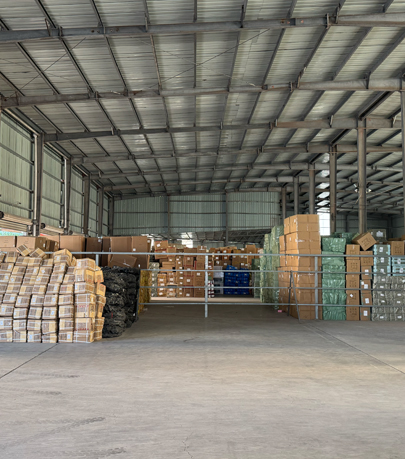
- Warehouse Capacity for Consolidation: A professional agent should own or manage a dedicated warehouse in Yiwu. This is the “hub” where your goods from various districts are collected, counted, and palletized. Without a physical warehouse, an agent cannot perform the deep quality inspections required for professional .
- Industry-Specific Experience: Does the agent understand the safety standards for toys in District 1, or the material certifications for jewelry in District 3? Sourcing electronics requires a different skillset than sourcing textiles. Ensure your agent has a proven track record in your specific niche.
- Transparency in Documentation: A legitimate agent will provide you with the original factory invoices. If they refuse to show you the raw price they paid the manufacturer, they are likely acting as a hidden trading company. Demand full visibility into the “Factory-to-Warehouse” paper trail.
Beyond the Basics: Cultural and Technical Competence
The best agents don’t just speak English; they speak “Production.” They should be able to read technical drawings, understand CAD files for OEM projects, and navigate the complex export regulations of the Yiwu Customs Bureau.
Frequently Asked Questions (FAQ)
1. Is it better to buy directly from a factory or through a Yiwu sourcing agent?
While buying directly sounds cheaper, most Yiwu factories do not have export licenses or English-speaking staff. A yiwu sourcing agent bridges this gap by handling the complex logistics, legal paperwork, and quality inspections that a factory typically won’t manage for an individual international buyer.
2. How much does a Yiwu sourcing agent typically charge?
Most reputable agents work on a commission-based model, charging between 3% and 10% of the total order value. This fee covers sourcing, warehousing, consolidation, and quality control. Beware of “free” agents they often hide a much larger markup in the product price, similar to a trading company.
3. Can a sourcing agent help with low MOQs (Minimum Order Quantities)?
Yes. One of the biggest advantages of a yiwu sourcing agent is their ability to negotiate with stall owners in the Futian Market. Because they have ongoing relationships with suppliers, they can often secure smaller quantities (e.g., 1–5 cartons) that a factory would usually reject from a direct foreign buyer.
4. How do I know if I’m dealing with a trading company or an agent?
The “Transparency Test” is the easiest way to tell. Ask for the original factory name and location. A sourcing company vs agent conflict is revealed here: an agent will gladly take you to the factory or show you the original invoice, while a trading company will keep the source a secret to protect their markup.
5. Does a Yiwu agent handle “Shipping from China” and customs?
Absolutely. A full-service agent manages the entire process from the market floor to the port. They provide warehouse space to consolidate products from different districts into one container and prepare all the necessary export documents (Packing List, Invoice, Bill of Lading) to ensure a smooth customs clearance process in your home country.
In Conclusion:
Choosing between a yiwu sourcing agent and a trading company isn’t just about who handles your paperwork it’s about defining your business’s future. The right choice depends entirely on your current scale and your long-term ambitions.
[Contact us today] for a free consultation and let us organize a guided tour of the Yiwu market tailored specifically to your industry. Let’s build your bridge to the world’s largest wholesale hub together.
