
Sourcing from Yiwu is easy; getting your goods home profitably is where the real game begins. In the world of international trade, logistics is either your biggest competitive advantage or your silent profit killer. Whether you are battling rising shipping costs from China or struggling to choose between the speed of Air and the scale of Sea, one wrong move can turn a winning product into a financial loss.
This guide isn’t just a list of transport modes. As your Dedicated Yiwu Sourcing & Logistics Expert, I’ve distilled years of on-the-ground experience and real-time shipping data into a definitive blueprint. From navigating the complexities of a China freight forwarder to mastering the “Middle Way” of Rail freight, you are about to learn how to slash lead times and protect your margins.
Stop guessing your logistics. Let’s master your supply chain.
Understanding the Landscape: Why Logistics Start in Yiwu
Yiwu isn’t just a city; it’s the beating heart of the world’s supply chain. Known as the “World’s Supermarket,” the Yiwu International Trade City houses over 75,000 booths. However, the real magic happens outside the market gates. Because of this massive density, the infrastructure for freight shipping from China is more robust and specialized here than in any other manufacturing hub like Shenzhen or Guangzhou.
The “Yiwu Advantage” in Global Logistics
While other cities specialize in high-tech or heavy machinery, Yiwu specializes in consolidation. This is the art of taking products from 20 different suppliers and fitting them perfectly into one container.
- Proximity to Major Hubs: Yiwu sits strategically near the Ningbo-Zhoushan Port (the world’s busiest by cargo tonnage) and the Shanghai Port, providing a dual-exit strategy for sea freight.
- The YXE Hub: It is the starting point of the longest railway line in the world, the Yiwu-Madrid Railway, making it the undisputed leader in Rail Freight logistics.
- Customs Efficiency: Yiwu has its own dedicated customs clearance centers designed specifically for “Small Commodity Exporting,” which streamlines the paperwork for diverse, multi-SKU shipments.
Avoiding the “Volume Surprise”
The biggest mistake rookie traders make is treating sourcing and shipping as two separate silos. They buy 500 cartons of various sizes and only realize at the loading dock that they need a 40ft container instead of a 20ft, doubling their shipping cost from China instantly.
[Yiwu Market Map – Navigating the Logistics Districts]
Air Freight: Speed vs. Strategy
When time is your primary constraint, air freight is the gold standard for freight shipping from China. In a market as fast-paced as Yiwu’s, being first to market with a trending product can be the difference between a 300% markup and a clearance sale. However, speed comes at a premium, requiring a surgical understanding of how to manage your shipping cost from China.
When to Choose Air Freight:
- High-Value-to-Weight Ratio: Electronics, specialized medical equipment, or jewelry where the shipping cost is a small fraction of the product value.
- Inventory Gap-Filling: Bridging the “OOS” (Out of Stock) gap while your main FCL sea shipment is still in transit.
- Market Testing (MVP): Shipping 200kg of a new Yiwu product to test consumer demand before committing to a full container.
The Technical Side: Calculating Chargeable Weight
A common pitfall for new traders is looking only at the scale weight. Airlines use the concept of Chargeable Weight to ensure they aren’t losing money on “bulky but light” items (like pillows or plastic toys).
To calculate your shipping cost from China via air, you must compare the Actual Weight against the Volumetric (Dimensional) Weight. The airline will always bill you for the higher of the two.
The Volumetric Formula:
The industry standard for international air freight uses a “dim factor” of 6000 (or 5000 for some express couriers).
Volumetric Weight (kg) = (Length (cm) × Width (cm) × Height (cm)) ÷ 6000
Expert Example:
If you ship a box weighing 10 kg with dimensions 60 × 60 × 60 cm:
- Actual Weight: 10 kg
- Volumetric Weight: (60 × 60 × 60) ÷ 6000 = 36 kg
You pay for 36 kg, not 10 kg.
This is why packaging optimization in Yiwu is vital.
Air Express vs. Standard Air Freight
Choosing the right “tier” of air service is critical for your bottom line.
| Feature | Air Express (Courier) | Air Freight (Standard) |
| Service Type | Door-to-Door (DDU/DDP) | Port-to-Port / Door-to-Door |
| Top Carriers | DHL, FedEx, UPS | Emirates SkyCargo, Cathay Pacific |
| Typical Speed | 3–5 Business Days | 7–12 Business Days |
| Weight Sweet Spot | Under 100kg | 100kg – 500kg+ |
| Customs Handling | Automated / Broker included | Requires formal entry & docs |
Sea Freight: The Backbone of Global Trade
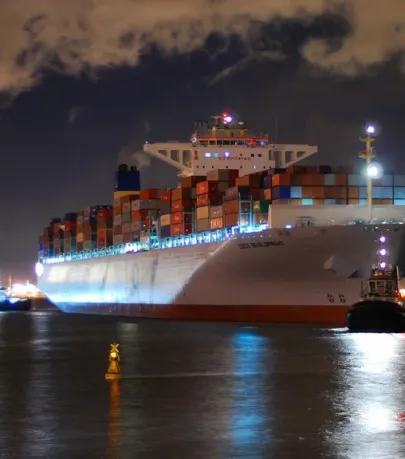
For the majority of Yiwu traders, sea freight is the only way to move mass volume while keeping the unit cost low. In the world of freight shipping from China, the ocean is the most cost-effective highway, but it requires a strategic choice between sharing space or owning the box.
LCL (Less than Container Load): The Entry-Level Solution
Perfect for small businesses or those testing new product lines from the Yiwu market. Your goods share a container with other importers, meaning you only pay for the volume (CBM) you actually use.
- Pros: Dramatically lower entry cost for shipments between 1 and 12 CBM.
- Cons: Higher risk of “handling damage” because your goods are loaded and unloaded at consolidation warehouses. Expect an additional 5–7 days for the “co-loading” process.
FCL (Full Container Load): The Gold Standard of Security
When your business scales, FCL becomes the most secure and cost-efficient method. You rent the entire “metal box,” which is sealed at the Yiwu warehouse and only opened at your final destination.
| Container Type | Capacity (Approx. CBM) | Payload (Approx. KG) | Best For |
| 20ft Standard | 28–30 CBM | 18,000 – 22,000 kg | Heavy cargo (tiles, machinery) |
| 40ft Standard | 65–68 CBM | 26,000 kg | General consumer goods |
| 40ft HC (High Cube) | 75–78 CBM | 26,000 kg | Lightweight, bulky Yiwu toys/plastics |
Decoding the Total Shipping Cost from China
One of the biggest shocks for new importers is the “bill of fees” that arrives after the initial ocean freight quote. To truly master your shipping cost from China, you must account for the Three Pillars of Sea Costs:
- Origin Charges (The Yiwu Factor): This includes trucking from the Yiwu warehouse to Ningbo or Shanghai ports, and the “Export Declaration” fees required by Chinese customs.
- Ocean Freight (The Voyage): The actual cost of the ship’s journey, which fluctuates weekly based on fuel prices and seasonal demand.
- Destination Fees (The Last Mile): This is where many are blindsided. You must budget for port handling (THC), customs clearance in your home country, and the final truck delivery to your door.
For a deep dive into how customs, VAT, and import taxes are calculated under this term, check out our full DDP Shipping from China Guide: Everything You Need to Know About Taxes & Duties.
Rail Freight: The “Middle Way” (The Yiwu-Europe Express)
For traders targeting markets in Europe, Central Asia, or the Middle East, rail freight has emerged as the “Goldilocks” solution of freight shipping from China. It sits perfectly in the sweet spot: it is significantly faster than sea freight and dramatically cheaper than air.
The YXE Strategy: Direct from Yiwu
Yiwu is not just a sourcing hub; it is the origin of the Yiwu-Madrid Railway Line, the longest rail link in the world. This gives Yiwu-based exporters a massive logistical edge. Instead of trucking goods 200km to a seaport, your containers are loaded directly onto the “China-Europe Railway Express” right in the heart of the city.
Why Savvy Traders Choose the Rail:
- Speed Efficiency: While sea freight can take 35–50 days to reach European ports (especially with current Red Sea diversions), rail freight typically arrives in 15–20 days.
- Unmatched Reliability: Unlike sea freight, which is vulnerable to port congestion and typhoons, or air freight, which is sensitive to flight cancellations, rail is remarkably stable. It operates on a fixed, high-frequency schedule regardless of weather.
- Environmental Impact: As global brands move toward “Green Supply Chains,” rail offers a significantly lower carbon footprint compared to air or sea transport per ton of cargo.
Comparison of the “Middle Way”
When calculating your shipping cost from China, consider the rail for mid-to-high value goods like fashion, home appliances, or automotive parts.
| Mode | Transit Time | Relative Cost | Best For |
| Sea Freight | 35–50 Days | $ | Bulk/Low Value |
| Rail Freight | 15–22 Days | $$ | Mid-Value/High Turnover |
| Air Freight | 3–7 Days | $ | High Value/Emergency |
The Role of a Strategic China Freight Forwarder
Navigating Chinese customs and coordinating international carriers without a local partner is a recipe for expensive delays. In the Yiwu ecosystem, a reliable China freight forwarder isn’t just a service provider they are your “boots on the ground” and your first line of defense against supply chain disruptions.
Why You Can’t Skip a Local Expert:
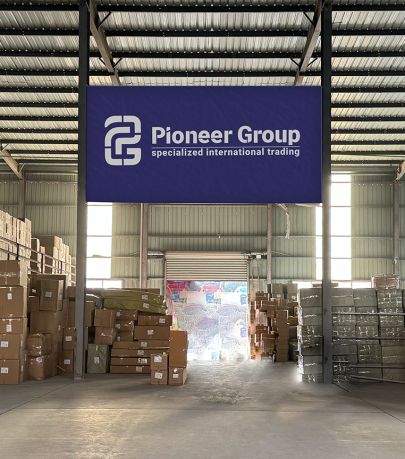
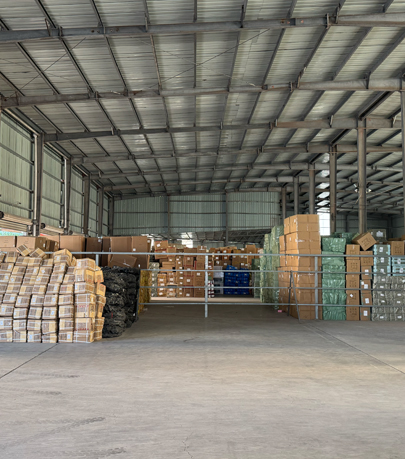
- Order Consolidation: Yiwu orders often come from 10+ different suppliers across various districts. Your forwarder gathers these at a central warehouse to create one streamlined shipment, drastically reducing your shipping cost from China.
- On-Site Quality Inspection: Once goods leave China, returns are nearly impossible. A forwarder with a Yiwu presence can verify quantities and packaging integrity before the container is sealed.
- Customs Brokerage: Navigating the “Paperwork Labyrinth” of HS Codes, export licenses, and certificates of origin requires localized knowledge to avoid port seizures or fines.
Understanding Incoterms: Who Pays for What?
Before signing any supplier contract, you must define the transfer of risk and cost. In freight shipping from China, three specific Incoterms dominate the landscape:
EXW (Ex Works)
The supplier’s responsibility ends at their factory door. You are responsible for the trucking to the port, export clearance, and the entire international voyage.
- Best for: Experienced traders with their own China freight forwarder who want total control over costs.
FOB (Free on Board)
The most common term for sea freight. The supplier pays all costs to get the goods onto the vessel at a designated port (e.g., FOB Ningbo). Once the cargo is “over the ship’s rail,” the cost and risk transfer to you.
- Best for: Most importers, as it balances responsibility between the factory and the buyer.
DDP (Delivered Duty Paid)
The “Hands-Off” or “All-In” option. The price includes the product, shipping, import duties, and “last mile” delivery to your warehouse.
- Best for: New traders or those who want a predictable, fixed shipping cost from China without dealing with customs paperwork.
Major Ports Near Yiwu: The Logistics Powerhouse
While Yiwu is an inland city, its proximity to the world’s most advanced maritime and rail infrastructure makes it a logistics powerhouse. Your choice of departure point significantly impacts your transit time.
| Departure Point | Distance from Yiwu | Primary Advantage |
| Ningbo-Zhoushan Port | ~2.5 Hours | The world’s busiest port; handles 90% of Yiwu sea freight. |
| Shanghai Port | ~4 Hours | The global leader for high-volume air cargo and specialized sea freight. |
| Yiwu Railway Hub | Local | Zero trucking time; direct “Silk Road” rail access to Europe & Central Asia. |
Conclusion: Turning Logistics into Your Competitive Advantage
Mastering freight shipping from China is not just about moving boxes; it’s about protecting your profit margins and ensuring your business can scale without supply chain bottlenecks. From choosing between the speed of Air Freight and the volume of Sea Freight to navigating the “Middle Way” via Rail, your logistics strategy should be as carefully planned as your product sourcing.
In the fast-paced Yiwu market, the difference between a successful season and a logistical nightmare often comes down to the partner you choose. A professional China freight forwarder with a physical presence in Yiwu ensures that your goods are inspected, consolidated, and shipped using the most cost-effective methods and correct Incoterms.
Don’t let shipping complexities hold your business back. Whether you are looking for a reliable DDP shipping quote or need a partner to manage your warehouse consolidation in Yiwu, Pioneer Group is here to simplify your journey.
Take the next step in your global trade journey:
[Get a Free Shipping Quote]: Send us your CBM and destination, and we’ll provide a transparent breakdown of your shipping cost from China.
Your global supply chain starts here. Let’s move your business forward.
