
China freight rates have entered peak season 2026 with a bang. Industry trackers put Drewry’s World Container Index above US$4,500 per 40-foot container in early July, and spot rates on some transpacific routes have more than doubled since mid-May, with market updates citing rises of roughly 120 percent to the US West Coast and 85 percent to the East Coast. If you ship in the second half of this year, the next few weeks of decisions will show up directly in your landed cost.
Why China Freight Rates Are Climbing
Three forces are stacking on top of each other. First, the classic July-to-September peak: retailers and distributors worldwide are booking space for holiday-season inventory at the same time. Second, a pull-forward effect: many importers accelerated orders ahead of possible tariff changes later in the year, compressing months of demand into weeks. Third, capacity constraints: vessel availability and route disruptions have limited how much supply can respond. The result is textbook: demand up, capacity tight, china freight rates climbing on the routes that matter most to wholesale buyers. Current index levels are published weekly by Drewry’s World Container Index.
4 Moves for Importers to Make Now
- Book space 3 to 4 weeks ahead. Waiting for a dip during peak season usually means paying the spot premium and risking rolled cargo. If your goods must arrive for Q4 selling, lock the space.
- Consolidate toward full containers. LCL surcharges bite hardest in tight markets. Combining suppliers into one FCL shipment through a consolidation warehouse converts scattered parcels into one predictable cost.
- Compare quotes on the same incoterm. When rates move weekly, a CIF quote from one supplier and an FOB quote from another are not comparable. Fix the incoterm first, then compare.
- Build a buffer into landed cost. Price your goods assuming rates hold or rise through September. If they ease, you gain margin; if they spike further, you are not selling at a loss.
What a Rate Spike Does to Unit Cost: Quick Math
The arithmetic is worth doing explicitly, because percentages hide the real impact. Take an illustrative 40-foot container carrying 8,000 units. At US$4,000 freight, shipping adds US$0.50 per unit. If the rate doubles to US$8,000, that becomes US$1.00 per unit: a US$0.50 swing on every single item, straight off your margin if your selling price is fixed. Now run the same numbers with 2,000 large units instead of 8,000 small ones and the swing is US$2.00 per unit. The denser your container, the more insulation you have; the bulkier your product, the more china freight rates dictate your profitability.
Three signals worth watching weekly while rates stay volatile: the World Container Index itself, carrier general rate increase (GRI) announcements for the routes you use, and blank sailing counts, which show carriers pulling capacity to defend prices.
What This Means for Bulk Buyers
Volatile china freight rates punish improvised logistics and reward planning. Buyers who combine early booking, consolidation, and clear terms are consistently landing goods cheaper this season than buyers chasing spot deals. Pioneer Group is a China sourcing company based in Yiwu, serving bulk and container buyers in 30+ countries; sourcing, 100 percent inspection, consolidation, and shipping from China run as one coordinated process, which is exactly what keeps costs predictable in a market like this one.
China Freight Rates: FAQ
Will china freight rates fall after peak season?
Historically, rates ease after the September-October shipping crunch, but 2026 carries unusual variables: tariff timing and route constraints could keep floors higher than last year. Plan on elevated rates through Q3 and treat any easing as upside.
Should I delay non-urgent shipments?
If your goods are not tied to Q4 selling, shipping after peak season can save real money. The judgment call is inventory risk versus freight savings; a 2-hour conversation about your timeline is usually enough to make it rationally.
How do I actually secure vessel space?
Through early, complete bookings: confirmed order, final carton data, and documents ready. Pioneer Group prepares consignments in its Yiwu warehouse so bookings go in early with accurate data, which is what carriers prioritize when space is tight.
Shipping in the next 8 weeks? Send your product list through the quote form: Pioneer Group replies within 2 hours (business hours) with current rate guidance built into an itemized quote.
How Pioneer Group can help
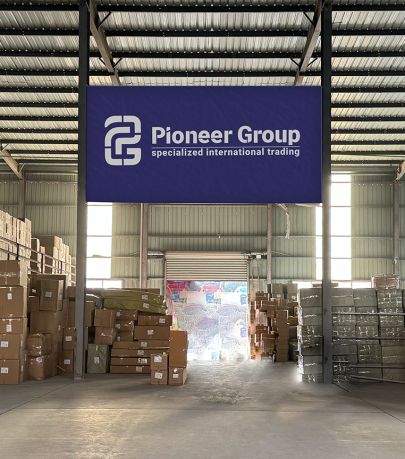
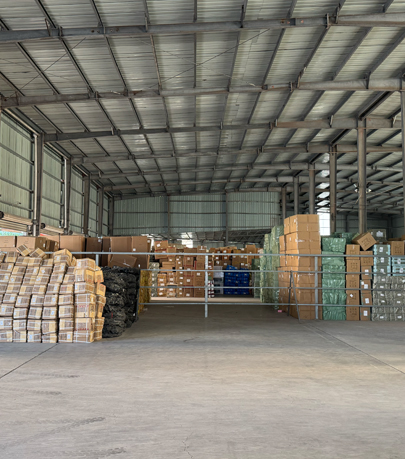
When rates climb, timing and container fill decide your landed cost. We hold goods in the Yiwu warehouse and consolidate several suppliers into one shipment, so you stop paying freight on empty space.
- Sourcing. Access to 5,000+ factories from an office in Yiwu, so you deal with the maker instead of a reseller.
- Quality inspection. Three stages, raw material, in production and pre shipment, with photo and video reports.
- Consolidation and shipping. Orders from many booths received at one warehouse and loaded as a single shipment.
Commission is 3 to 5 percent by order quantity, paid by you and never by the factory, with no hidden markup on the goods. Minimum order value is US$5,000. We reply within 2 hours during China business hours, in English, Chinese, Arabic, Russian, Turkish or French.
Talk to us: WhatsApp +86 190 2577 9716, info@pioneergptrading.com, or the contact form.
Pioneer Group is a China sourcing agent based in Yiwu, China, helping wholesale and bulk buyers source, inspect, consolidate, and ship orders from China.