


Ask a Chinese supplier “are you a factory?” and almost every one of them says yes. The factory vs trading company question is the first real test a new importer faces, and the answer shapes your price, your lead time, and who fixes a problem when one appears. You cannot settle it by asking. You settle it with five signals that are hard to fake.
The honest answer: a trading company is not a scam
Before you run any test, be clear that only one of the two answers is actually a problem.
What a trading company actually adds
Start here, because most advice online gets this wrong. A trading company buys from factories and resells to you. It adds a margin, but it also adds real value: it can combine ten products from eight factories into one order, it usually speaks better English, and it accepts quantities no factory would look at. For a small or mixed order, a good trading company is often the correct choice.
The risk is mistaken identity
The problem is never that you are dealing with a trader. The problem is thinking you are dealing with a factory when you are not, because then you priced in factory margins and paid trader margins. The factory vs trading company exercise is not about finding a villain. It is about knowing which one is on the other end of the chat.
Five tests for factory vs trading company
Every test below runs from your desk, before you pay for a sample or book a trip.
- Catalogue breadth. A real factory makes a narrow range. One line of injection moulded housewares, or socks, or LED bulbs. If one supplier offers socks, phone cases, kitchen scales and garden tools, you have a trader. Nobody owns four unrelated production lines.
- What the business licence actually says. Every Chinese company has a business licence with a stated scope. Manufacturers carry manufacturing terms in it. Traders carry wholesale, retail and import and export terms. Ask for a copy. Read the scope text itself, not the company name, because names mean nothing.
- Address consistency. Compare the address on the licence with the address of the “factory” they describe. A genuine manufacturer’s registered address is usually the plant itself, in an industrial zone. A registered address in a city office tower, with a production site three provinces away, is worth chasing. If the two do not match, ask who owns the plant and whether the answer is a name or a description.
- Specific equipment and capacity questions. Ask how many machines run the line, what brand and model they are, daily output per machine, and lead time at full load. A factory answers fast and in numbers, because it is their own floor. A trader goes vague, promises to “check with the production department”, and comes back a day later. Ask the same question again a week later and see whether the numbers hold.
- The polish paradox. The slickest English profile, the best photography and the most responsive sales rep often belong to a trader. Factories put money into machines, not presentation. Good marketing is not a red flag by itself, but it is never proof of manufacturing.
The five tells side by side
What each answer usually looks like on the two sides.
| Signal | What a factory looks like | What a trading company looks like |
|---|---|---|
| Catalogue breadth | One narrow line, socks or LED bulbs | Unrelated categories: socks, phone cases, garden tools |
| Business licence scope | Manufacturing terms in the scope | Wholesale, retail and import and export terms |
| Registered address | The plant itself, in an industrial zone | A city office tower, production site elsewhere |
| Equipment and capacity | Machine count, model and daily output, answered in numbers | Vague, plus a promise to check with production |
| Presentation | Money in machines, so a plainer profile | Polished profile, strong photography, very quick replies |
Read the signals together, not one at a time
The tests are stronger as a set than any one of them is alone.
Count the signals
No single test is conclusive. Some factories do sell adjacent categories. Some traders sit inside the same industrial park as their suppliers. Run all five and count how many point the same way. Three or more pointing at trading, and you should assume trading and negotiate on that basis.
How this fits with your other checks
This is ordinary due diligence, and it belongs beside the other checks you run before wiring money. Our guide to red flags when sourcing from China covers the warnings that sit outside the factory vs trading company question. Note this is a different axis from choosing between an agent and a trading company, which compares two ways of being represented rather than two types of supplier.
Where factory vs trading company checks need a person on the ground
Checking from a distance eventually stops telling you anything new.
The ceiling on desk research
Everything above is desk work, and desk work has a ceiling. A licence can be genuine and the production still subcontracted. An address can look right on paper. Only someone standing in the building can confirm the machines exist, that they are running, and that they are running your product.
What a visit confirms
That is our job. Pioneer Group works from Yiwu with access to over 5,000 factories, verifies suppliers in person, and runs quality inspection in China at three stages with photo and video reports. If you want the factory vs trading company answer confirmed rather than estimated, talk to our Yiwu sourcing agent team. We reply within 2 hours during business hours, China time.
Frequently asked questions
Is a factory always cheaper?
Usually on a single high volume product. On a mixed order across categories, a trader or an agent can land cheaper once you count consolidation and freight. Pioneer Group charges 3 to 5 percent commission and adds no markup on the goods.
Can I just ask for a factory video call?
Ask, it helps. A live walk through the floor beats photos. It is still not proof of ownership, which is why Pioneer Group verifies in person.
Does the factory vs trading company answer change my minimum order?
Yes. Factories set higher minimums per item. Pioneer Group works with a US$5,000 minimum order value across the whole order, not per product.
How Pioneer Group can help
Sorting real manufacturers from trading companies is slow work from another country. Pioneer sources from a network of 5,000+ factories we deal with directly, so you know who actually runs the production line before any money moves.
- Sourcing. Access to 5,000+ factories from an office in Yiwu, so you deal with the maker instead of a reseller.
- Quality inspection. Three stages, raw material, in production and pre shipment, with photo and video reports.
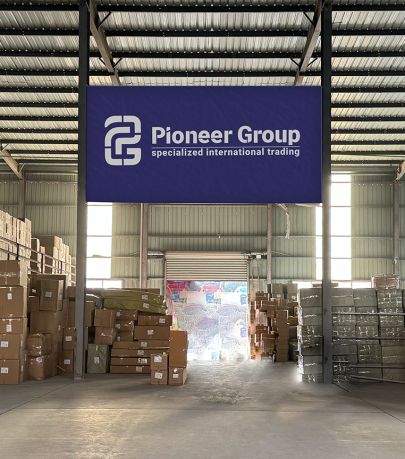
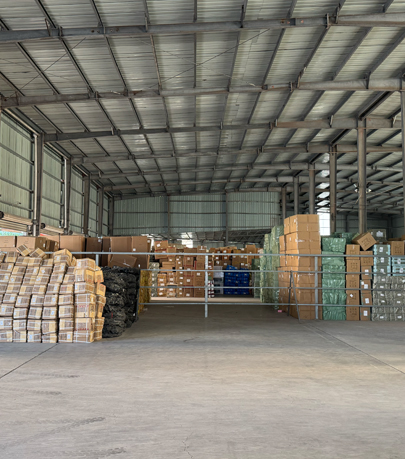
- Consolidation and freight-agent handover. Orders from multiple suppliers are received at our Yiwu warehouse, consolidated, and handed to the buyer’s nominated freight agent.
Commission is 3 to 5 percent by order quantity, paid by you and never by the factory, with no hidden markup on the goods. Minimum order value is US$5,000. We reply within 2 hours during China business hours, in English, Chinese, Arabic, Russian, Turkish or French.
Talk to us: WhatsApp +86 190 2577 9716, info@pioneergptrading.com, or the contact form.
Pioneer Group is a China sourcing agent based in Yiwu, China, helping wholesale and bulk buyers source, inspect and consolidate orders before handover to the buyer’s freight agent.