You bought from eleven booths in one week. Each supplier has its own cartons, its own delivery van and its own idea of what “ready” means. Yiwu consolidation is the process that turns those eleven separate deliveries into one container with one set of export documents. Done properly, you pay for one shipment and one customs clearance. Done badly, you are counting missing cartons after the ship has sailed.
Why mixed-supplier containers are the Yiwu pattern
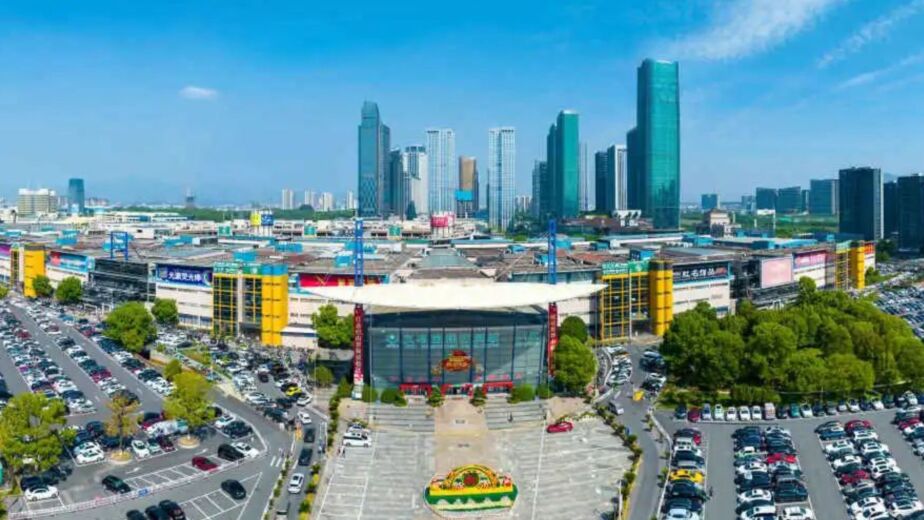
Most buyers here do not fill a container from one factory. They buy scissors at one booth, hair clips at another, kitchen racks at a third. Alone, each order is too small to ship on its own. Together they fill a box. With 75,000+ booths across 5 main districts, a warehouse layer that combines orders is not a luxury, it is how the market works.
Where the saving actually comes from
The saving is structural, not a discount. One shipment means one freight booking, one exporter of record and one clearance at destination instead of a dozen. Combining orders is a standard move in any supply chain, but in Yiwu it is the default. If you are still choosing between a shared box and a full one, read our guide to LCL vs FCL container consolidation.
The 6 steps of Yiwu consolidation
The process runs in a fixed order, from the first supplier truck at the warehouse door to the container doors closing.
Steps 1 to 3: delivery, counting and damage
- Delivery in. Each supplier sends your goods to one warehouse address, usually by small truck, over days or weeks as production finishes. Nothing moves to the port yet.
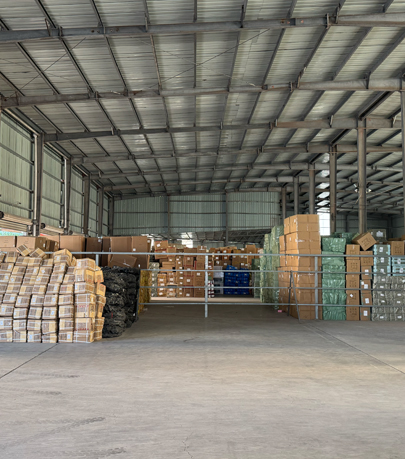
- Receiving and counting. Every delivery is checked against your order list: supplier name, item, carton count, pieces per carton. Short shipments get caught here, while the supplier is still ten minutes away, not after loading.
- Damage check. Crushed cartons, wet corners, split tape and obviously broken samples are flagged on arrival. This is not a full inspection, it is the last cheap chance to reject a bad delivery.
Steps 4 to 6: repacking, stacking and loading
- Repacking and re-marking. Many booth cartons are made for a truck ride across town, not six weeks at sea. Weak boxes are repacked, and cartons are marked with your shipping marks and numbers so they can be identified at destination.
- Stacking by destination. Goods are grouped by container, buyer and port, then held in one area so nothing gets mixed with another customer’s cargo. A carton left in the wrong stack is the one that sails to the wrong country.
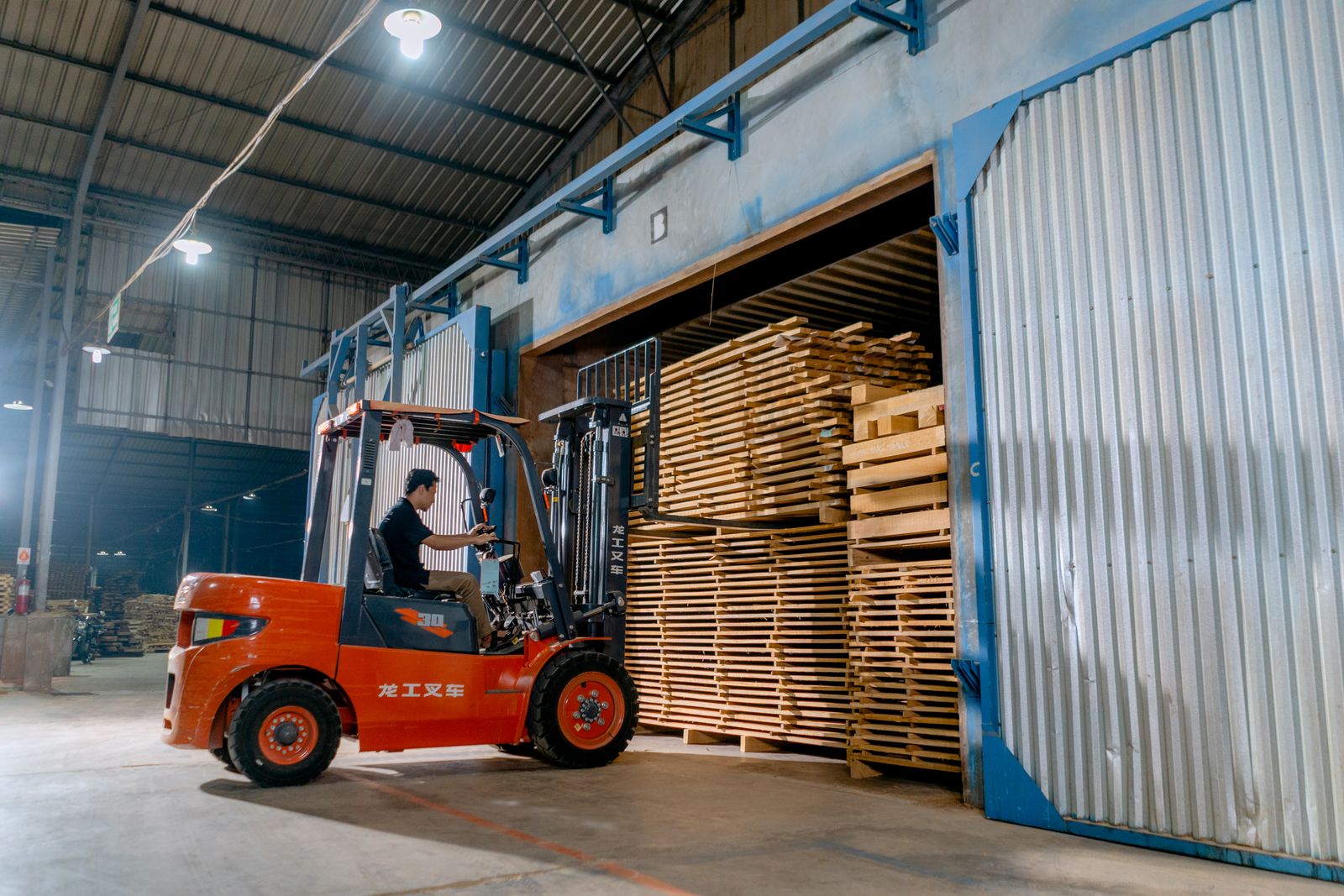
- Loading. The container is loaded in a planned order: heavy and dense at the bottom, fragile on top, space filled so cargo cannot shift. A packing list and loading photos close the file, and those photos are your only record of how the cargo sat before the doors were sealed.
Who handles each step, and what goes wrong
The six steps are split between your suppliers and the warehouse, and each one is built to catch a specific failure.
| Step | Who does it | What can go wrong |
|---|---|---|
| 1. Delivery in | Each supplier, by small truck | One late supplier holds the whole container for weeks |
| 2. Receiving and counting | Warehouse staff, against your order list | A short shipment of 480 pieces instead of 500 is only found after loading |
| 3. Damage check | Warehouse staff, on arrival | Crushed cartons and wet corners are accepted instead of rejected on the spot |
| 4. Repacking and re-marking | Warehouse staff | Booth cartons built for a truck ride fail at sea, or arrive with no shipping marks |
| 5. Stacking by destination | Warehouse staff | Cargo is mixed with another customer’s goods and ships to the wrong port |
| 6. Loading | Warehouse staff | Cargo shifts in transit, or there is no packing list and photo record to check against |
Free storage is a clock, not a parking lot
Storage is the cost buyers price wrongly, because the first weeks of it look free.
What the free period actually covers
Most Yiwu consolidation services include a free storage period, commonly counted in weeks from the first delivery. It exists because suppliers finish at different times and your container cannot leave until the slowest one arrives. After that period, storage is charged, usually by cubic metre per month.
Someone has to chase the cartons that are missing
Sitting goods still need managing. Someone has to know which cartons are already in, which supplier is late, whether a delayed item is worth waiting for or worth shipping without, and whether the free window is about to expire. A warehouse that only stores boxes and never chases the missing ones will hand you a container that is 90 percent complete. Once loading is done, the rest is freight, covered in our overview of shipping from China.
Where Yiwu consolidation needs a person on the ground
Everything above is knowledge you can use. What a blog post cannot do is receive your cargo.
The work that only happens on site
Counting cartons against a purchase list in Chinese, arguing with a supplier who delivered 480 pieces instead of 500, deciding on the spot whether a carton is export-fit, and preparing the export paperwork all happen in a building in Yiwu, on working days, in the local language. You cannot run that from another continent.
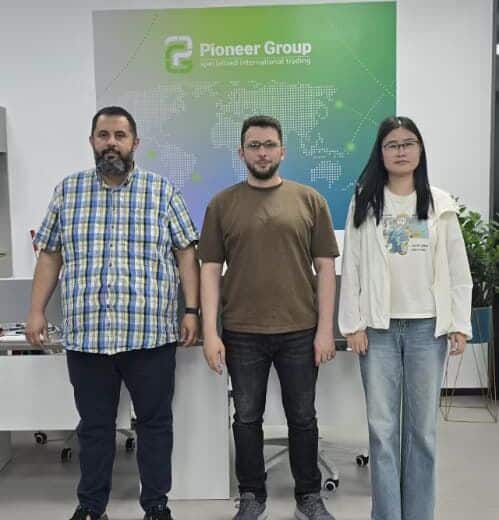
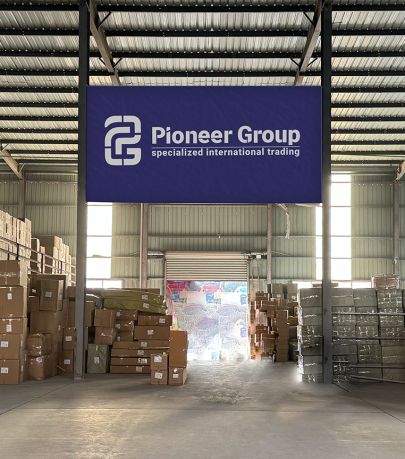
That is the service Pioneer Group provides: our warehouse in Yiwu, China receives, checks, repacks, stores and loads your goods, and our Yiwu sourcing agent team chases the suppliers who are late. We work in English, Chinese, Arabic, Russian, Turkish and French, and reply within 2 hours during business hours, China time.
Frequently asked questions
How many suppliers can go into one container?
There is no fixed limit. Pioneer Group regularly combines goods from many booths into one container, as long as the total order value meets our US$5,000 minimum and the cargo fits.
Does Yiwu consolidation replace quality inspection?
No. Receiving checks counts and obvious damage. Inspection checks the product itself, at raw material, in production and pre-shipment stages, with photo and video reports.
What does Yiwu consolidation cost?
Pioneer Group charges a commission of 3 to 5 percent depending on order quantity, with no hidden markup on your goods. Warehouse storage beyond the free period and freight are quoted separately.
How Pioneer Group can help
Orders from a dozen suppliers arrive at different times and in mismatched cartons. We receive them into our Yiwu warehouse, check each delivery against the order, and consolidate everything into one container for shipping.
- Sourcing. Access to 5,000+ factories from an office in Yiwu, so you deal with the maker instead of a reseller.
- Quality inspection. Three stages, raw material, in production and pre shipment, with photo and video reports.
- Consolidation and shipping. Orders from many booths received at one warehouse and loaded as a single shipment.
Commission is 3 to 5 percent by order quantity, paid by you and never by the factory, with no hidden markup on the goods. Minimum order value is US$5,000. We reply within 2 hours during China business hours, in English, Chinese, Arabic, Russian, Turkish or French.
Talk to us: WhatsApp +86 190 2577 9716, info@pioneergptrading.com, or the contact form.
Pioneer Group is a China sourcing agent based in Yiwu, China, helping wholesale and bulk buyers source, inspect, consolidate, and ship orders from China.