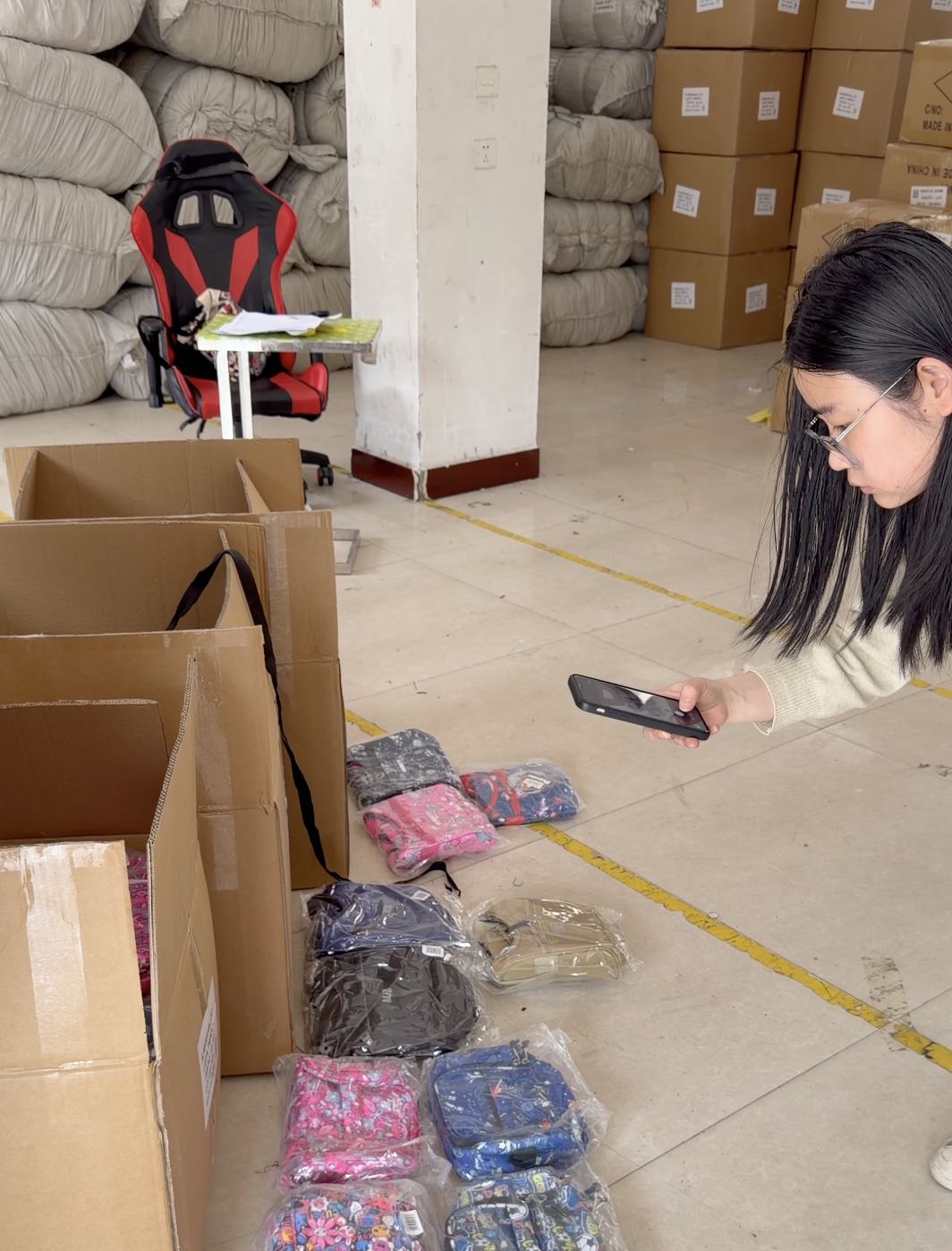
The container arrives, you cut the first carton open, and the product is wrong. Cracked housings, the wrong shade, a zip that fails on the third pull. Receiving defective goods from China is not rare, and it is not the end of the order. What you do in the first hour decides whether you hold a claim your supplier must answer, or a story they can argue with. Here is what to document, and which outcomes are realistic.
The honest answer: you are negotiating, not suing
Almost no bulk buyer sues a Chinese factory over one bad batch: the legal cost exceeds the goods. What you hold instead is leverage: the unpaid balance, your next purchase order, and the supplier’s interest in a repeat buyer. Evidence turns that leverage into a number. Anger does not.
6 steps after receiving defective goods from China
Work through these in order. The first four steps protect the evidence, and the last two turn that evidence into a claim the factory has to answer.
Freeze the shipment where it landed
- Stop unpacking. Goods spread across a warehouse floor and mixed with other stock cannot be tied back to a carton. Leave the pallets as they landed.
- Photograph everything in situ. Outer cartons before opening. Shipping marks and carton numbers. Then the defect, wide and close, with a coin for scale. Photos taken a week later prove nothing.
Measure the failure rate and keep the packaging
- Quantify the defect rate. Count a real sample, not an impression. Open a fixed number of cartons across different pallets, count the failed units, and express it against the shipped quantity: 340 failures in 4,000 pieces is 8.5 percent. That number is what a factory responds to, and what an acceptable quality limit measures.
- Keep the cartons and shipping marks. Flatten nothing until the claim closes. Carton numbers tie a defect to a production run, and factories trace bad lots from that.
Check the contract, then file a claim
- Read the contract before you write a word. Your proforma invoice or sales contract usually carries a defect remedy clause: what counts as a defect, the reporting window, and what the supplier owes. Some windows are as short as 7 days from arrival. Miss it and your position weakens.
- Raise it as a claim, not a complaint. A complaint says the quality is bad. A claim is written, dated and quantified: order number, shipping marks, carton numbers, defect rate, photos, the clause you invoke, and the remedy you want. One message, factual, unemotional.
Supplier fault or carrier fault, and four realistic remedies
Before you decide what you are owed, decide who caused it. The fault line runs between the factory and the freight, and it changes both the letter you write and the party you send it to. Once that is settled, the list of outcomes worth asking for is short.
Telling supplier fault from carrier fault
Separate these before you write, because the two go to different parties. Supplier fault is consistent: the same flaw, in the same place, spread evenly through the batch, inside cartons that arrived intact. Carrier or packaging fault is uneven and physical: crushed corners, water staining, damage near the container door, usually an export packaging question. Freight-side failures run a different route, covered in our guide to shipment problems from China, and rest on the bill of lading, not your supplier.
The four remedies compared
When defective goods from China are genuinely the supplier’s fault, four outcomes are realistic:
| Remedy | When it fits | What it is worth to you |
|---|---|---|
| Rework | Cosmetic, fixable defects: relabelling, repacking, swapping a component | The supplier usually covers the labour |
| Replacement in the next order | You are placing another order with the same factory | The most common settlement: free units added to your next order. Cheap for the factory, useful only if you reorder |
| Partial credit | The balance is still unpaid | A credit note against the unpaid balance. This is why holding final payment until goods are checked matters: leverage vanishes once the account settles |
| Discount on the failed units | You have already paid in full | A retroactive price cut. The weakest position, and often the only cash outcome |
Where defective goods from China need a person on the ground
Two parts of this process do not travel well over email. Both of them happen in China, and both are cheaper to arrange before the container leaves than after it lands in your warehouse.
Running the claim in Mandarin, and the work behind it
One layer here is left out deliberately: running the claim itself. Negotiating a remedy in Mandarin with a supplier who knows the goods have already left China is a different job from writing a good claim letter. So is the physical work behind it: sorting the batch, supervising rework, re-inspecting the replacement units.
The cheaper answer sits at the factory door
The real answer sits earlier. Most defective goods from China were preventable at the factory door. A pre-shipment check catches the fault while the goods are in the seller’s hands and your money is in yours, the only moment you hold full leverage. Once the container closes, you are negotiating. See quality inspection in China for the three stages, and contact us if a batch has landed.
Frequently asked questions
How long do I have to report defective goods from China?
Whatever your contract says, commonly 7 to 30 days from arrival. Report within days regardless: delay is the first argument a supplier uses.
Should I refuse to pay the balance?
Do not withhold it silently. State in writing that the balance is held pending resolution, and name the remedy you want. Silence reads as default.
Can an agent inspect goods that already shipped?
Not in your country. Pioneer Group inspects in China at three stages including pre-shipment, with photo and video reports. That is where most defective goods from China get stopped.
How Pioneer Group can help
Once defective stock has landed, most of your leverage over the factory is gone. We take the case back to the supplier in Chinese from our Yiwu office and inspect the replacement production before it ships.
- Sourcing. Access to 5,000+ factories from an office in Yiwu, so you deal with the maker instead of a reseller.
- Quality inspection. Three stages, raw material, in production and pre shipment, with photo and video reports.
- Consolidation and shipping. Orders from many booths received at one warehouse and loaded as a single shipment.
Commission is 3 to 5 percent by order quantity, paid by you and never by the factory, with no hidden markup on the goods. Minimum order value is US$5,000. We reply within 2 hours during China business hours, in English, Chinese, Arabic, Russian, Turkish or French.
Talk to us: WhatsApp +86 190 2577 9716, info@pioneergptrading.com, or the contact form.
Pioneer Group is a China sourcing agent based in Yiwu, China, helping wholesale and bulk buyers source, inspect, consolidate, and ship orders from China.